
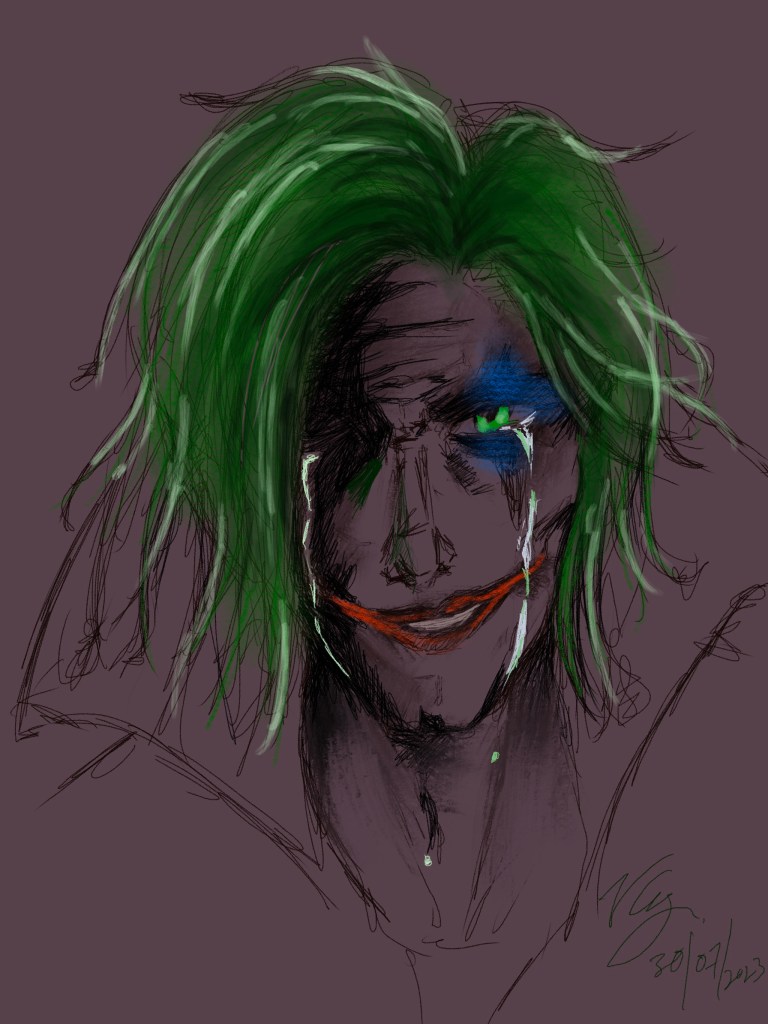
My consultant psychiatrist mentor once told us in a meeting: “Those who want to be a psychiatrist must watch the latest Joker movie!”
I couldn’t agree more.
After watching Joaquin Phoenix’s award-winning Joker, I am both amazed and glad. The latter is because finally, someone out there has managed to go in-depth into the bizarre character of Joker and link everything of his behavior to legitimate mental illnesses. The movie even managed to spread awareness about mental illness by poking at the topic of stigmatization. So how realistic is the movie Joker? Is it possible to bridge evil and mental illness? If so, how would the law decide who deserves the punishment?
To answer the first question: One straight answer- it’s very real. Allow me to walk you through the movie, from a psychiatrist’s point of view.
The movie starts by showing Arthur working as a clown while shedding his tears. Let’s back up, as we clinicians like to view things chronologically. My starting scene would be when Arthur is born, as even the birth conditions are vital to our diagnostic process. There was no information about his biological mother as it was written in the scene that he was abandoned, and adopted. When Arthur found his mother’s medical record, it shows that his adopted mother has bizarre behavior, psychosis, narcissistic personality. Another impressive detail is that her interview session with the officer, while she was detained, shows her lack of emotion, a blank stare, as she is preoccupied with something. She was speaking irrelevantly, and as we psychiatrists term it, her affect was blunted. With these clues, I would say poor Authur has grown up with a schizophrenic mother with a narcissistic personality disorder. This is actually bad news, while schizophrenia is a severe mental illness with its subject disturbed by hallucinations and delusions, the combition with narcissistic personality disorder makes it dangerous. Narcissistic personalisty disorder is a twisted form of lifestyle and view that others are inferior compared to oneself. Its characterised by self-absorption, grandiosity, and lack of empathy towards others. Narcissism is also a unique predictor in criminal behaviour. One may ask, why would then someone like that ended up adopting a child, or even allowed to? My suspicion, is that there may be a secondary gain involved, such as an attempt in getting a form of social aid. Back then, they may not have a well established screening policy for adoptive mothers, allowing the system to be taken advantage of.
We may say Arthur’s tragedy begins there. The beatings he suffered caused trauma to his brain. That sets up the core character of the Joker: the pathological laughing. In the movie, Arthur handed out a card when he couldn’t control himself laughing in the bus, telling others that he has a condition, hoping others would understand. So, is it true? that it is a legitimate condition? for someone to laugh uncontrollably? Yes, it is true, and it’s called the pseudobulbar affect. In psychiatry, its also tern emotion incontinence, for someone to have difficulty restraining from laughing or crying. It often result of certain brain damage, such as trauma to the brain, which cuts off our brains ability to control autonomic reponses like laughing or crying. On personal note, I have the opportunity to review 2 cases of petient with such condition, both instead of laughing, are having difficulty with crying uncontrollably. They both were in great distress, as they told that they were constantly being misunderstood even by their families, calling them ‘crybaby’. If crying can cause so much problem, imagine what a person who can’t control his laugh would go through? It must be constantly worrying for Arthur to interact with others, knowing he might unintentionally offend them.
From the movie’s setting, I would say it was set in the 80s when psychiatry is still young in its field. Back then there was a movement, urged by WHO to de-institutionalize, or as others term it- releasing those who were living in mental asylums, based on safeguarding human rights as well as reducing the economic burden of mental illness. However, as we have seen in the movie, the effort was not well planned out. When Arthur went to meet his case manager (I’m not sure whether she was a psychiatrist, if she was, she would be a very bad one), she was only asking routine questions like ‘Are there any voices’, or ‘Have you been taking your medicine’. There was no therapy done, no empathy in her approach, and no support of any form given to Arthur. Nowadays, knowing the impact of de-institutionalizing the mentally ill, even in Malaysia we are advancing in psychiatry rehabilitation, giving out social support such as supported employment, home visits, and social skill training for the mentally ill in the community. Without those, as we can see, Arthur is struggling to hold a job, got exploited by others, and is stigmatized for his illness.
Now comes the hard question, is evil a mental illness as well? There is a debate about this. Evil, in psychiatry, is often associated with a condition we called antisocial personality disorder, which is characterized by a person’s lack of empathy towards others. They live a lifestyle that disregards the safety of others, breaking the law without any remorse for their actions. Interestingly, it was found that a family that has a member with antisocial personality disorder is more likely to have a child with the same condition. Also, childhood abuse and neglect, with erratic parenting styles are associated with high risk for developing such condition. Normally, people with such condition would start to commit truancy even since adolescent age. Arthur, as in the movie, lacks support in him having this condition as he has been a law abiding citizen until his living circumstances worsened, pushing him to commit violent acts towards others. Maybe, is that Arthur has always been trying to supress himself, but as he chose to embrace his illness with a maladaptive manner, that’s how he became ‘evil’ turning into the ‘Joker’.
So, here comes the important question: If mental illness can be associated with evil, how do we decide justice? How will our justicial system judge these people when they commit a crime? Will they receive punishment the same as a healthy person? The answer is both yes and no. Yes, they will face justice, they would still be tried in court and faces the hammer of the law. But, there is a catch, they will require a formal assessment by a forensic psychiatrist, who would determine if the act of crime is in fact directly caused by their illness so severe that they have no way to know the nature of their action. If so, they would still be kept in an asylum, until the day they are pardoned by multiple government parties. If not, they would face the punishment same as everyone else.
For example: If a schizophrenia mother c mother murdered a child, the result of hallucinating that the child is a demon, without the knowledge that she is killing someone, or committing the crime during the act itself, she would be deemed insane and kept in an asylum until pardoned. However, if she knows that a child, and she did it anyway without seeking help first, even with her illness she will be punished.
Also, any act following the usage of alcohol or illicit substances, as well as personality disorders are not accepted for insanity plea.
So, tragic as it may be for Arthur, he will still be punished for his actions. As his deluded mind told him that he was manipulated by the talk show host Murray, resulting in him killing the host, he did not seek help, he chose not to take his medicine, and he is aware of his action of breaking the law. As a psychiatrist, I would testify him being ‘sane of mind during the time of the act’. The rest, such as the courts decision on whether is he guilty, is up to the jury and the judge.
I hope this post would create some awareness in the community about the burden of mental illness. Arthur did not choose his childhood and illness. Although he committed a crime, it can be a result of how he was being treated by society. Sidelined, disregarded, blamed, abandoned… those are the real difficulty faced by my patients. Even now the modern era, the struggle continues. The only way forward, as I see it, is for the public made aware, that mental illness is, after all, an illness. Nobody wants to be afflicted by it. We, the clinician, will continue to advocate for them, for that is what we sign up for: to protect and care for our patients.

 Dr Vie Cheong Thong M.D.